Home Quotes Sad Urdu Shayari 2025

Sad Urdu Shayari 2025

💔 Sad Urdu Shayari 2025: Deep Poetry for the Broken Heart

Urdu Shayari is not merely poetry—it is the soul’s language, the voice of the heart when words alone cannot express what runs so deeply. Our collection of Sad Urdu Shayari 2025 brings together the most poignant, touching, and emotionally resonant verses in Urdu, beautifully expressing themes of loss, longing, heartbreak, separation, melancholy, and the quiet resilience of the human spirit.

Each verse is presented in three forms: original Urdu script, Roman Urdu transliteration, and English translation—making this collection accessible to speakers of all backgrounds while honoring the original beauty of Urdu poetry. Whether you’re navigating heartbreak, reflecting on loss, processing complex emotions, or simply seeking the solace that only authentic poetry can provide, these shayari couplets speak directly to your soul.

Understanding Urdu Shayari: More Than Just Poetry

Urdu Shayari has a profound place in South Asian culture and emotion. To understand why sad shayari touches us so deeply, it helps to understand what makes it special:

  • The Language of the Heart: Urdu evolved as the language of lovers, mystics, and poets. It carries centuries of emotional depth. Words in Urdu often carry layers of meaning that English cannot fully capture.
  • Couplet Structure (Shers & Matlas): Traditional shayari uses the form of couplets where each line can stand alone as a complete thought. This structure creates moments of profound realization within just two lines.
  • Metaphor & Symbolism: Urdu poetry speaks in metaphors—the beloved as the moon, separation as night, longing as an endless river. These images create visceral emotional understanding.
  • Cultural Heritage: Shayari carries the emotional wisdom of Sufi mystics, Mughal courts, independence movements, and generations of lovers and dreamers. It connects you to centuries of human experience.
  • Universal Yet Personal: While shayari expresses universal emotions (love, loss, separation), each verse feels intimately yours when you read it—as if the poet knew exactly what your heart was feeling.
  • Rhythm & Recitation: Urdu shayari is meant to be recited aloud (often in gatherings called “Mushairas”). The rhythm, meter (Qafia and Radif), and musicality create emotional resonance that silent reading only partially captures.

Why We Need Sad Shayari in 2025

In today’s world of constant positivity culture, sad shayari serves an essential purpose:

  • Permission to Feel: In a world that often tells us to “be positive” and “move on,” sad shayari gives permission to feel sadness deeply and authentically. It validates that grief, heartbreak, and longing are human and beautiful.
  • Cultural Connection: For Urdu speakers and South Asians, shayari connects us to our heritage, our grandmothers’ wisdom, our cultural emotional vocabulary.
  • Healing Through Words: Sometimes hearing (or reading) someone else express exactly what you’re feeling is profoundly healing. You realize you’re not alone in your pain.
  • Escape from Superficiality: Shayari demands depth. It invites reflection, contemplation, and genuine emotional engagement—a antidote to shallow online discourse.
  • Artistry & Beauty in Sorrow: Sad shayari teaches us that there is beauty in sadness, artistry in sorrow. Not everything needs to be “fixed” or “overcome”—sometimes it just needs to be felt and witnessed.

Types of Sad Shayari

Our collection includes shayari on various themes of sadness:

  • 💔 Love & Heartbreak (Mohabbat aur Tootna): Verses about unrequited love, separation from the beloved, and the pain of lost relationships. These often use the metaphor of the beloved as the heart’s center.
  • 🌙 Longing & Separation (Firaq): Poetry expressing the ache of missing someone, the emptiness left behind, and the painful waiting that never ends. Firaq is perhaps the deepest emotion in Urdu poetry.
  • 🎭 Life’s Disappointments (Zindagi ke Daramaan): Shayari about broken dreams, unmet expectations, and the harsh realities of life that don’t match our hopes.
  • 🌑 Internal Struggle (Nafs ka Jung): Verses about battling one’s own emotions, fighting inner darkness, and the loneliness of internal conflict.
  • 👥 Betrayal & Trust (Gaddari): Poetry about those who hurt us, trust broken, and the particular pain of betrayal by loved ones.
  • 🕯️ Nostalgia & Memories (Yaadein aur Ateet): Shayari about the pain of memories, the ache of the past, and how the mind keeps returning to happier times.
  • 🌊 Helplessness (Bebasiyon): Verses about feeling powerless, unable to change what’s happening, caught in circumstances beyond control.
  • 🌍 Existential Sadness (Wajood ka Dukh): Deeper poetry questioning meaning, purpose, and the existential weight of being human.

How to Read & Experience Urdu Shayari

For Deepest Impact, Try This Approach:

  1. Read Aloud (If You Can): Shayari is meant to be recited. Even if your Urdu pronunciation isn’t perfect, reading the verses aloud lets you feel the rhythm and beauty the poet intended.
  2. Slow Down: Don’t rush through shayari. Read one couplet, then pause. Let it sit with you. What emotions does it stir? What memories does it bring?
  3. Understand the Metaphors: Urdu poetry is full of symbols. The moon = beloved’s beauty. Night = separation & darkness. Fire = passion & pain. The garden = paradise/happiness. Understanding these helps you see deeper layers.
  4. Feel Before You Analyze: Don’t start by dissecting the grammar or meter. First, feel what the poet felt. Analysis can come later.
  5. Connect to Your Own Story: The best shayari is when you read it and think, “That’s exactly what I felt.” Let these verses speak to your experience.
  6. Read in Context: Each shayari is part of a larger poem. Reading the original post with all 40 shayari gives you the full emotional journey.
  7. Visit a Mushaira (Poetry Gathering): If possible, experience shayari recited live in a traditional mushaira gathering. The communal emotion and skilled recitation create a spiritual experience.

For Urdu Learners:

  1. Compare Languages: Read the Urdu, then Roman Urdu, then English. Notice how meaning shifts with language and how some nuances can’t be translated.
  2. Study Vocabulary: Sad shayari uses specific Urdu words with emotional depth. Look them up, understand their historical and poetic usage.
  3. Recognize Patterns: Notice how certain words appear repeatedly (qismat=fate, wasl=union, firaq=separation, dil=heart). These are the emotional anchors of Urdu poetry.
  4. Listen to Recordings: YouTube has beautiful recitations of classic and contemporary shayari. Hearing skilled reciters is invaluable for learning pronunciation and emotional expression.

The Structure of Urdu Shayari (For the Curious)

Understanding shayari’s structure helps you appreciate it more deeply:

  • Sher (Couplet): A two-line verse that is often a complete, standalone unit. Can be read independently or as part of a longer poem.
  • Matla (Opening couplet): The first couplet, where both lines rhyme and follow the rhyme scheme.
  • Qafia & Radif: Qafia is the rhyming word, Radif is the rhyming sound before it. These create the musical pattern.
  • Meter (Bahr): Urdu poetry uses classical meters inherited from Arabic and Persian poetry, creating rhythm and musicality.
  • Imagery: Rich, layered imagery—often using nature, celestial bodies, and emotional landscapes to express complex feelings.

Famous Shayari Traditions in Urdu Literature

Our sad shayari collection draws from rich traditions:

  • Sufi Poetry: Mystical shayari about spiritual longing, separation from the divine, and the soul’s journey. Masters like Hafiz and Rumi had profound influence on Urdu poetry.
  • Mughal Court Tradition: Courtly shayari about love, beauty, and refined emotion. Poets like Mir Taqi Mir and Mirza Ghalib elevated Urdu poetry to an art form.
  • Romantic Poetry: The tradition of expressing love and longing, often with dramatic separation and eternal devotion as themes.
  • Social & Political Shayari: Modern shayari addressing societal pain, injustice, and collective sorrow—from independence movement poets to contemporary voices.

Frequently Asked Questions About Sad Urdu Shayari (FAQ)

Q: Is it healthy to read sad shayari regularly?

A: Yes, when done intentionally. Sad shayari can be cathartic and validating. However, if you’re in active depression or crisis, consider pairing it with professional support or uplifting content. Balance matters.

Q: I don’t speak Urdu—can I still appreciate shayari?

A: Absolutely. The English translations convey the meaning and emotion. However, know that something is always lost in translation. If you’re interested, learning Urdu opens up new depths of appreciation.

Q: How is shayari different from regular poetry?

A: Shayari specifically refers to poetry in Urdu (or Persian/Arabic in their traditions) with specific structural forms (sher, matla, qafia/radif). It’s a tradition with centuries of history and convention, not just any poem in Urdu.

Q: Can I share these shayari on social media?

A: Yes, absolutely! Sharing shayari spreads beauty and emotional connection. Please credit the source when possible, and consider adding your own reflection: “This shayari speaks to me because…”

Q: What if a shayari makes me cry?

A: That’s the sign of a powerful shayari. You’re connecting with the poet’s emotion and your own. Don’t suppress the tears—let yourself feel. This is healing work.

Q: How do I find the original poet?

A: Many traditional shayari are so old that original attribution is lost. Our collection includes both classic verses and contemporary shayari. For individual verses, a search online may help trace the source.

Q: Can shayari help with grieving?

A: Many people find that reading shayari about loss helps them process grief. It validates the pain and connects you to a community of people who have felt similar sorrow throughout history.

Q: What’s the difference between sad shayari and depressing poetry?

A: Good sad shayari, even when expressing deep pain, has beauty and artistry. It doesn’t wallow helplessly—it transforms pain into something beautiful and meaningful. Depressing poetry may lack this transcendence.

Q: Should I memorize shayari?

A: If it resonates, yes. Memorizing shayari keeps the verses with you always. You can recite them when you need them, share them in conversations, and keep the tradition alive.

Q: How has shayari evolved in 2025?

A: Modern shayari keeps the traditional forms while addressing contemporary issues—urbanization, technology’s impact on relationships, modern loneliness, identity struggles. The structure remains rooted in tradition while the content feels current.

Honoring Urdu Poetry Tradition

By engaging with sad shayari, you’re participating in a tradition that includes some of humanity’s greatest poets. You’re connecting with your cultural heritage (if you’re South Asian), understanding the emotional vocabulary of millions of people, and experiencing poetry at its most authentic and moving.

Sadness, expressed through the art of shayari, becomes not just a burden to bear, but a source of beauty, connection, and meaning.

💜 A Reflection: In a world that rushes toward happiness, sadness is an act of rebellion—a refusal to pretend everything is fine. Sad shayari honors this rebellion. It says: I am hurting, and that hurting is worthy of poetry, worthy of beauty, worthy of being heard.

📖 Pro Tip: Read the complete collection of 40 Sad Urdu Shayari in the post below. Each verse is a small journey into the depths of human emotion. Take your time. Let them work their magic on your heart.

Explore our complete Sad Urdu Shayari 2025 collection below and let these verses speak to your soul. 💔🌙

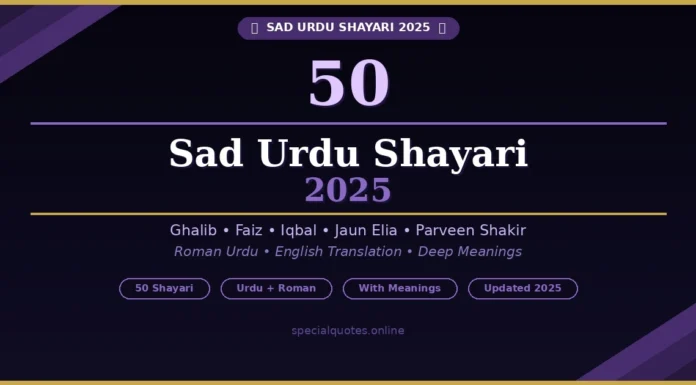
50 Sad Urdu Shayari 2025 | Deep & Touching Emotions

sad Urdu shayari 2025 by Ghalib Faiz Iqbal Jaun Elia Parveen Shakir
اردو شاعری — غم اور درد کا خزانہ 50 Sad Urdu Shayari 2025 غالبؔ، فیضؔ، اقبالؔ، جونؔ ایلیا اور پروینؔ شاکر کے سب سے اداس اشعار With Roman Urdu, English Translation and Deep Meanings50 ShayariUrdu + Roman + EnglishWith MeaningsUpdated 2025These Sad Urdu Shayari are drawn from...